Questions are uncomfortable things.
They expose the edges of our knowing, and most of us do not like edges. We prefer clean lines, firm answers, and the reassuring sense that we are, more or less, in control. “Knowledge is power,” we say—and we mean it. To know is to master, to define, to settle things.
But God refuses to be settled.
In many ways, God is the ultimate unknown—the One who cannot be contained by language, boxed into doctrine, or reduced to a tidy set of propositions. And yet, in a strange and beautiful paradox, this same unknowable God has made Godself known: in Jesus Christ, in the quiet persistence of the Holy Spirit, and in the wild, intricate glory of creation itself.
We are not left in the dark.
And yet—we are not given floodlights either.
There is a long habit in the Church of trying to resolve this tension too quickly. Faced with mystery, we reach for certainty. Faced with questions, we produce answers. Sometimes this takes the form of confident declarations from pulpits; sometimes it hides behind the phrase “the Bible clearly says.” Either way, the impulse is the same: to turn God into something manageable, and which we can fit into a neat box.
Something we can explain.
Something we can, if we are honest, control.
But what if that instinct is not faith, but fear?
What if God is not a problem to be solved, but a mystery to be entered?
The doctrine of the Trinity sits right at the heart of this tension. It is, in many ways, Christianity’s most central claim—and its most stubborn puzzle. One God, three Persons: Father, Son, and Holy Spirit. Not three gods. Not one person wearing three masks. Three, and One, at the same time.
It is no surprise that even the greatest theologians have found themselves circling this idea, probing it, refining language, and still coming up short. Every analogy breaks down eventually. Every explanation leaves something unsaid.
And perhaps that is the point.
The Trinity is not a riddle to be cracked, a problem to be solved, a question to be answered. It is an invitation.
An invitation into a God who is, at the deepest level, relational. Not solitary, not static, but a living communion of love. Before creation, before time itself, there is relationship—self-giving, other-receiving, joyfully shared.
And if that is who God is, then knowing God cannot simply be about acquiring the right information. It must be about participation.
About relationship.
About stepping, slowly and imperfectly, into that divine life.
This changes the way we approach both faith and doubt. Questions are no longer threats to be silenced, but doorways to be walked through. Not-knowing becomes not a failure, but a necessary space in which something deeper can grow.
Because love—real love—cannot be mastered.
It can only be entered into.
So perhaps the Trinity is not meant to make everything clear. Perhaps it is meant to keep us humble. To remind us that God is always more than we can grasp, and yet closer than we dare to imagine.
A mystery, yes.
But a mystery that welcomes us in, and loves us, just as we are – questions, failures, and all.
Revd. Talisker
Talisker’s weekly bulletin can also be found on Substack
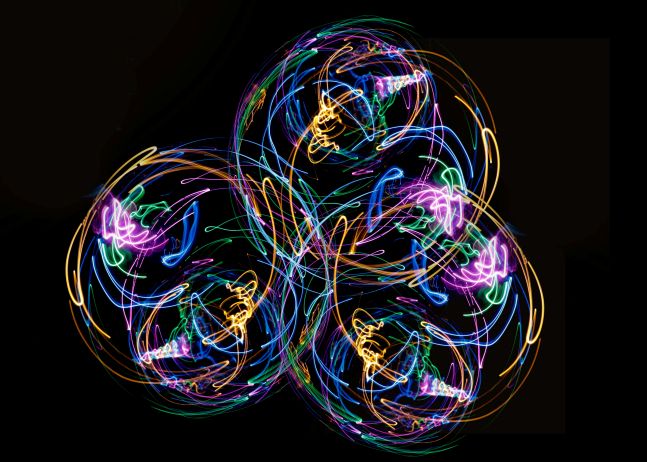
Photo by MARIOLA GROBELSKA on Unsplash