
Sin, Hope, Forgiveness, Love
Blog Bulletin
Published on: Thursday October 15 2026, 3:51 pm
Recently someone in one of the churches here asked me why we mention sin so much. Why is it in every service? It’s true that every Sunday service has what’s called a “general confession” in it, where we all together acknowledge that, to quote the English Book of Common Prayer 1662:
We have erred, and strayed from thy ways like lost sheep, We have followed too much the devices and desires of our own hearts, We have offended against thy holy laws, We have left undone those things which we ought to have done, And we have done those things which we ought not to have done.
It’s a pretty accurate description of how life goes! I don’t know about you, but this past week I have too frequently done what I wanted and not perhaps what I should. I haven’t got everything right. I definitely haven’t done all the things I should, and I have also definitely done and said things I shouldn’t! Those “things” might be literal tasks on my to-do list, actions to do with or impacting other people, or they might be words or conversations.
Sin might be better described as attitudes, words, thoughts, and actions which break relationships and trust with one another, with the world, and with God. Sin can be deliberate. Sin is also quite often accidental! But it still causes damage and hurt, and it still needs to be acknowledged and the damage repaired. Because, quite simply, if the damage isn’t acknowledged, it cannot be repaired. Ignoring the crack in the glass doesn’t make it go away, even if you didn’t mean to drop it.
The problem that too often happens is that we want to pretend one of two things. Either that sin doesn’t exist in a modern world; or that it’s something only other people do.
The first is, I think, a pretty hard point to argue when looking at the world around us, filled with injustice and pain as it is. We live in a broken world, but despite all the brokenness, there is also immense beauty and love.
The second argument is far more dangerous. It can run something like this: ‘Why must we talk about sin so much? We all do our best. I haven’t done anything awful. All this talk of sin is so depressing. I want to feel positive and uplifted.’
Fair point. Most of us probably haven’t committed crimes against humanity, or mass murder or commercial fraud affecting thousands. Many of us do our very best to live honest lives of integrity and justice. So what has sin to do with me?
Have you ever made a mistake? Have you ever said something hurtful – accidentally or deliberately? Have you ever done something, and later discovered that it caused a lot of damage, despite the fact it was intended to do good? Have you ever lied about something? Said something untrue about someone to someone else? Acted negligently or unkindly towards a thing or person that you were supposed to be taking care of (and that includes animals and the environment)?
Then you too have acted in a way that broke a relationship of trust. You too have missed the mark – for that is what the New Testament Greek word for sin actually means. It’s the word used of an archer who aims with bow and arrow, and misses the target. He falls short.
When we put it like that, it becomes paradoxically both easier to bear, and also a lot broader in definition, catching a lot more in its net.
I’m reminded of the story in John 8.1-11:
Jesus returned to the Mount of Olives, but early the next morning he was back again at the Temple. A crowd soon gathered, and he sat down and taught them. As he was speaking, the teachers of religious law and the Pharisees brought a woman who had been caught in the act of adultery. They put her in front of the crowd.
“Teacher,” they said to Jesus, “this woman was caught in the act of adultery. The law of Moses says to stone her. What do you say?”
They were trying to trap him into saying something they could use against him, but Jesus stooped down and wrote in the dust with his finger. They kept demanding an answer, so he stood up again and said, “All right, but let the one who has never sinned throw the first stone!” Then he stooped down again and wrote in the dust.
When the accusers heard this, they slipped away one by one, beginning with the oldest, until only Jesus was left in the middle of the crowd with the woman. Then Jesus stood up again and said to the woman, “Where are your accusers? Didn’t even one of them condemn you?”
“No, Lord,” she said.
And Jesus said, “Neither do I. Go and sin no more.”
The Pharisees and teachers of the law have collectively broken the law by bringing only the woman before Jesus. If she really was caught in the act, where’s the man she was caught with? The law demands that he too is stoned (Deuteronomy 22.22). But he is interestingly absent. And who were the witnesses – of whom there should be two or three They should cast the first stones.
Jesus turns it back on them – both the law which they invoked, but also a far broader issue. ‘Let the one who has never sinned cast the first stone.’ And the all slipped away, beginning with the oldest. He asks the woman, does no one condemn you? No, she replies. Neither do I. Go and sin no more.
What wonderful words. Neither do I. She is released into a new life, a new chance, to begin again. Yes, she has been publicly humiliated, but she has also been publicly forgiven, and she has a chance to begin again. Whilst the accusers may have gone, there’s a huge crowd standing around Jesus and the woman, silent and watching.
Which brings me on to the place of hope, and of love, in all this talk of sin.
The person who disliked the talk of sin, asking why we must speak of it, when what he really wanted was to feel uplifted and to know God’s love, will hopefully find what he seeks here.
We admit to each other, publicly and in very generic terms, our imperfections; whispering the real details to God in the silence of our hearts. The priest pronounces out loud, publicly, God’s forgiveness to all who confess and are repentant. It is a ceremony, yes; but one with great importance. It reminds us that we’ve all messed up, and we all continue to do so; month by month, week by week, day by day. Hopefully we learn from our mistakes and tend not to make the same ones more than two or three times. But the human ability to make a hash of things is pretty legendary – after all, why else would there be the cliché: to err is human, to forgive, divine.
And it is when we realise the depth of God’s love and forgiveness, the limitless nature of God’s love – just how far God will go to reconcile us to himself – that the wonder of that love and the seriousness of our mess-ups really comes home to us. Nothing, not even death, can separate us from the love of God in Christ Jesus. For God so loved the world (that includes you and me by the way) that he chose to become human, one of us, in Jesus. To live and die and rise again, so that death and sin cannot have the last word.
What could bring greater hope, and joy, and relief and release than the knowledge that despite all my idiocy and mistakes, all the dumb things I’ve done (and will doubtless continue to do, quite unintentionally most of the time) I am loved and forgiven by God, and that I am able to ask forgiveness from God and from those I have hurt, and to seek reconciliation. That reconciliation is even possible! And that on those desperately sad occasions when we humans cannot forgive each other for the hurts done and caused, we can give the situation to God, and ask him to step in and bring healing and forgiveness and reconciliation, in the way that only he can.
Rev. Talisker
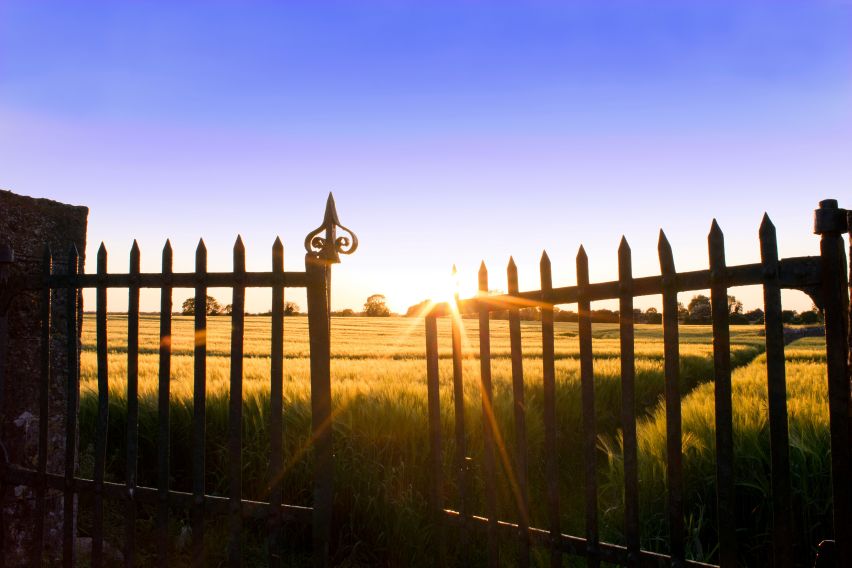
Photo by Jack Niles on Unsplash

Prayer Readings for Morning Prayer – 18th – 24th October
Prayers & Readings
Published on: Thursday October 15 2026, 9:24 am
Please find the daily readings for morning prayer here and you can also view it on screen or print out the PDF document.
You can also access the Church Of England’s Daily Prayer services.
If you wish, you can also download the Church of England “Daily Prayer” smartphone & tablet app from Apple Store or Google Play, which gives you the whole service including all the readings for every day.
If you or anyone you know would prefer a copy of Morning Prayer printed out, please let us know and we will post this to you. We will be sharing more resources online over the coming days and weeks, so please continue to check our benefice website and our Facebook page.

Prayer Readings for Morning Prayer – 11th – 17th October
Prayers & Readings
Published on: Thursday October 8 2026, 11:09 am
Please find the daily readings for morning prayer here and you can also view it on screen or print out the PDF document.
You can also access the Church Of England’s Daily Prayer services.
If you wish, you can also download the Church of England “Daily Prayer” smartphone & tablet app from Apple Store or Google Play, which gives you the whole service including all the readings for every day.
If you or anyone you know would prefer a copy of Morning Prayer printed out, please let us know and we will post this to you. We will be sharing more resources online over the coming days and weeks, so please continue to check our benefice website and our Facebook page.

Whose vineyard is it, anyway?
Blog Bulletin
Published on: Thursday October 1 2026, 2:30 pm
Most of us know what it is to become protective of something we have worked hard for. A garden, a project, a church community, a way of doing things: we have given it our time and care, and we want it to flourish. Somewhere along the way, though, it can become difficult to tell the difference between caring for something and needing to control it. Am I the steward? Or am I the owner?
Jesus tells a troubling story about a vineyard. The owner plants it, equips it and entrusts it to tenants. When the harvest comes, he sends people to collect the fruit. The tenants refuse. They beat and kill the messengers. The owner sends more, and finally sends his son. Still the tenants will not give up what they have decided is theirs.
It is a violent parable, and we should not hurry past that violence to find a comforting message. But I am struck by the owner’s persistence. He keeps sending messengers, even when the tenants have made it painfully clear that they do not want to hear from him. Most would give up. But this owner cares too much to quit.
The fruit of the vineyard
The tenants’ mistake is not that they have worked in the vineyard. They were meant to do that. Their mistake is to act as though working there makes it theirs to possess.
That is an uncomfortable distinction for those of us who care deeply about our churches and communities. We can put so much energy into keeping things going that keeping them going becomes the aim. We measure what we can see: attendance, money, buildings, the success of an event. These things matter, but they are not the whole harvest. And when it comes to the church, it is not our church at all. It is God’s church. It has survived many centuries without us, and will probably survive a few more if we allow God to remain in charge!
Which brings us to what the church produces.
To carry on reading, click here to access Talisker’s Substack page
Photo by Jordan Whitt on Unsplash

Prayer Readings for Morning Prayer – 4th – 10th October
Prayers & Readings
Published on: Thursday October 1 2026, 9:35 am
Please find the daily readings for morning prayer here and you can also view it on screen or print out the PDF document.
You can also access the Church Of England’s Daily Prayer services.
If you wish, you can also download the Church of England “Daily Prayer” smartphone & tablet app from Apple Store or Google Play, which gives you the whole service including all the readings for every day.
If you or anyone you know would prefer a copy of Morning Prayer printed out, please let us know and we will post this to you. We will be sharing more resources online over the coming days and weeks, so please continue to check our benefice website and our Facebook page.

Prayer Readings for Morning Prayer – 27th September – 3rd October
Prayers & Readings
Published on: Thursday September 24 2026, 9:20 am
Please find the daily readings for morning prayer here and you can also view it on screen or print out the PDF document.
You can also access the Church Of England’s Daily Prayer services.
If you wish, you can also download the Church of England “Daily Prayer” smartphone & tablet app from Apple Store or Google Play, which gives you the whole service including all the readings for every day.
If you or anyone you know would prefer a copy of Morning Prayer printed out, please let us know and we will post this to you. We will be sharing more resources online over the coming days and weeks, so please continue to check our benefice website and our Facebook page.
Sulking Prophets
Blog Bulletin
Published on: Thursday September 17 2026, 2:27 pm
God relents. Nineveh is spared. And Jonah is furious.
The story of Jonah is not necessarily one to be read as literal history, but as an exploration of loyalty, compassion, and the boundaries of human and divine action and forgiveness.
This Sunday finds us at the end of Jonah’s story. Not with triumph, but with a prophet sitting outside the city, sulking under a hastily grown plant, while the people he was sent to warn go about their ordinary lives, but having taken to heart the prophet’s message about the need to change their ways and honour God.
How dare they! How dare God!
The anger we recognise
Jonah’s prayer (or conversation with God) in chapter 4 is wonderfully honest. I love the way that the Old Testament allows, even encourages us, to be real with God about all our feelings, not just the nice stuff. Being angry and upset with God is absolutely fine, and God is not offended by our honest emotions.
Jonah tells God this is exactly why he tried to run away in the first place. He knew God was “gracious and merciful, slow to anger and abounding in steadfast love”, and he could not bear the thought of that love being given to Nineveh, the great enemy of Israel. We hate them! They’re awful! They deserve punishment! Why would I do anything to help them?
There is something deeply human here. We are often quite content to receive mercy ourselves. We become far less comfortable when it is offered to people we think deserve punishment. As far as he sees it, Jonah would rather die than live in a world where God’s compassion extends to his enemies. Hyperbole? Maybe. Real human emotion? Definitely.
The plant, the worm, and the question
God’s response is not a lecture. It is an experience. A lived story for Jonah, so that we can hear and see ourselves in that story.
He causes a plant to grow over Jonah, giving him shade and comfort. Jonah is “exceedingly glad” about this plant. Then God sends a worm to attack it, and a scorching east wind, until the plant withers and Jonah is once again miserable, angry enough to die.
Then comes the killer question that cuts through the whole story:
“You pity the plant, for which you did not labour, nor did you make it grow, which came into being in a night and perished in a night. And should not I pity Nineveh, that great city…?”
God’s compassion is wider than Jonah’s. It is wider than ours.
So what about us?
This story is very like Jesus’ parables. It make for a great tale, but if you listen with any degree of care and attention, it’s not very comfortable. It’s easy to sit in the role of Jonah’s correctors. We shake our heads at his narrowness. But then we realise, we are also Nineveh. And we are also Jonah himself.
The people of Nineveh were not morally superior. They were violent, oppressive, and deeply flawed. That’s why Jonah was sent to warn them to change their ways, or disaster would befall them. Yet when they turned from their evil way, God was able to avert the disaster that would have befallen them. A more modern phrasing would be that actions have consequences. They listened to the warning.
And Jonah wasn’t exactly an obedient Godly man. When God asked him to go to Nineveh, he immediately fled in the opposite direction, and put a lot of people in danger of their lives! When he acknowledged that he was wrong, owned up, and accepted what had to be done, he was saved – swallowed by a whale and spit up on the beach just by Nineveh, where he should have gone in the first place, if he had had the courage and compassion…
Courage to face our anger? Courage to follow compassion?
If we’re honest, many of us carry our own versions of Jonah’s anger. We may not call it that. We call it justice, or principle, or righteous indignation. But underneath it is often a reluctance to see certain people, certain communities, certain nations, included in the circle of God’s mercy. Please note I am not saying anything goes! But I am suggesting that nothing is beyond God’s compassion and mercy.
And the plant in our lives might be anything we cling to for comfort while remaining indifferent to the fate of others: our political certainty, our theological neatness, our sense of being on the right side. God is not against our comfort. He is against our comfort becoming more important to us than the lives of all the other people he loves.
The God of small things, who holds the whole world
Like the Gospel story where Jesus asks blind Bartimaeus, “What do you want me to do for you?”, God does not simply override Jonah. He engages him. He gives him space to speak his anger, then invites him into a larger vision. That is how God often works with us. Not by crushing our smaller loyalties, but by drawing us into a wider compassion.
The book of Jonah ends with a question, not a resolution. We are left with God’s final words hanging in the air: “And should not I pity Nineveh…?”
Perhaps that is the point. The story does not tell us whether Jonah ever came to share God’s heart for the city. Like so many of Jesus’ parables, it leaves that question open for us.
Rev. Talisker
Photo by Dave McDermott on Unsplash

Prayer Readings for Morning Prayer – 20th – 26th September
Prayers & Readings
Published on: Thursday September 17 2026, 10:10 am
Please find the daily readings for morning prayer here and you can also view it on screen or print out the PDF document.
You can also access the Church Of England’s Daily Prayer services.
If you wish, you can also download the Church of England “Daily Prayer” smartphone & tablet app from Apple Store or Google Play, which gives you the whole service including all the readings for every day.
If you or anyone you know would prefer a copy of Morning Prayer printed out, please let us know and we will post this to you. We will be sharing more resources online over the coming days and weeks, so please continue to check our benefice website and our Facebook page.

Prayer Readings for Morning Prayer – 13th – 19th September
Prayers & Readings
Published on: Thursday September 10 2026, 9:06 am
Please find the daily readings for morning prayer here and you can also view it on screen or print out the PDF document.
You can also access the Church Of England’s Daily Prayer services.
If you wish, you can also download the Church of England “Daily Prayer” smartphone & tablet app from Apple Store or Google Play, which gives you the whole service including all the readings for every day.
If you or anyone you know would prefer a copy of Morning Prayer printed out, please let us know and we will post this to you. We will be sharing more resources online over the coming days and weeks, so please continue to check our benefice website and our Facebook page.

Singing Hills and Stormy Seas
Blog Bulletin
Published on: Thursday September 3 2026, 2:17 pm
I love the passage in Isaiah 55, from verse 12 to the end, where the prophet gives us the image of the trees of the field clapping their hands, and the mountains and hills singing for joy. It is brimming with sunshine and wonder and happiness at sheer being-ness. The promise is that we will go out with joy and be led forth with peace. What a wonderful promise.
Sadly, life does not always feel like that. Much of the time we feel more like Jesus’ disciples in Matthew 8:23-27. In a boat, the waves thundering around us, the storm threatening to overwhelm us and drag us under. And God is firmly asleep in the bows, while we battle for our lives.
But see! The moment they ask for help, Jesus gets up and rebukes the waves and wind, and a calm follows. I should imagine that terror of the storm is quickly replaced by terror of “who on earth is this man that even the winds and waves obey him?” It is one thing to go about healing; that is not so unheard of, though nobody else can do the healing that Jesus has done. But control over the natural world? That is something else again. Only God can do that. We are in Moses territory here.
While this miracle is in and of itself wonderful and encouraging, for me the question is, how do we extrapolate this for us, here and now?
The key thing is, as so often, that Jesus is present but does not act until asked. God is with us, always. The Holy Spirit is within us at all times. But God is not a tyrant, and does not take over and order us around. Instead he invites, offers, suggests. And above all, he waits to be asked.
Next time we find ourselves in an unbearable storm, grumbling as to why God has not intervened, perhaps we could ask God for help? I am rapidly learning to ask at the first signs of clouds, instead of waiting for the thunder to roll. Because I would much rather be surrounded by singing hills and joyful shrubbery whenever possible. It is an image that brings a smile to my face every time I think about it.
Rev. Talisker
Image “Burst into Song” by Hannah Dunnett

Prayer Readings for Morning Prayer – 6th – 12th September
Prayers & Readings
Published on: Thursday September 3 2026, 9:11 am
Please find the daily readings for morning prayer here and you can also view it on screen or print out the PDF document.
You can also access the Church Of England’s Daily Prayer services.
If you wish, you can also download the Church of England “Daily Prayer” smartphone & tablet app from Apple Store or Google Play, which gives you the whole service including all the readings for every day.
If you or anyone you know would prefer a copy of Morning Prayer printed out, please let us know and we will post this to you. We will be sharing more resources online over the coming days and weeks, so please continue to check our benefice website and our Facebook page.

Prayer Readings for Morning Prayer – 30th August – 5th September
Prayers & Readings
Published on: Tuesday September 1 2026, 1:48 pm
Please find the daily readings for morning prayer here and you can also view it on screen or print out the PDF document.
You can also access the Church Of England’s Daily Prayer services.
If you wish, you can also download the Church of England “Daily Prayer” smartphone & tablet app from Apple Store or Google Play, which gives you the whole service including all the readings for every day.
If you or anyone you know would prefer a copy of Morning Prayer printed out, please let us know and we will post this to you. We will be sharing more resources online over the coming days and weeks, so please continue to check our benefice website and our Facebook page.

Prayer Readings for Morning Prayer – 23rd – 29th August
Prayers & Readings
Published on: Thursday August 20 2026, 9:15 am
Please find the daily readings for morning prayer here and you can also view it on screen or print out the PDF document.
You can also access the Church Of England’s Daily Prayer services.
If you wish, you can also download the Church of England “Daily Prayer” smartphone & tablet app from Apple Store or Google Play, which gives you the whole service including all the readings for every day.
If you or anyone you know would prefer a copy of Morning Prayer printed out, please let us know and we will post this to you. We will be sharing more resources online over the coming days and weeks, so please continue to check our benefice website and our Facebook page.

Crumbs under the table and plenty for all
Blog Bulletin
Published on: Thursday August 13 2026, 2:46 pm
On the 13th August, the Church of England commemorates, Octavia Hill. Octavia came from a family of social reformers concerned with prison reform and with development of better housing and sanitation. She was passionate about improving the living conditions of working people. She became a leading figure in the education of women and in housing improvement and compassionate ‘landlordism’. She recognised contact with nature as an important strand in human wellbeing, and co-founded the National Trust in order to protect countryside and public footpaths to enable access for everyone. Her Christian faith was lived out in her work for the stewardship of nature and the care and enablement of the vulnerable.
In the current context of the crisis in prison capacity and due pursuit of justice, pressure on provision of good housing for all, challenges in accommodating refugees and migrants, climate anxiety and the increasing body of research that confirms the importance of access to green spaces for our physical and mental health, Octavia Hill seems a very relevant Christian to remember today.
Running throughout the narrative of scripture is the message that God values all his creation and that in loving God we must love others as ourselves. A reason offered in the Old Testament to give weight to this command to love others, to welcome, to care, to make provision for those in need is that we must remember that God’s people have been aliens and slaves in Egypt. This has happened in the past and could happen to any of us again today, as those displaced from their homes because of fires, natural disaster, loss of jobs and other domestic crises – let alone war or civil collapse – can testify. Perhaps those attacking refugees today might find themselves in need of a bit of hospitality tomorrow.
This Sunday’s account of Jesus’ encounter with the Canaanite woman who asks him to have mercy because her daughter is suffering can feel odd, even uncomfortable. (Matthew 15: 21-28) Jesus appears first to ignore her, deny her as not one of the lost sheep of Israel, and then to insult her as inferior to those children of Israel. She responds, “Yes, Lord, yet even the dogs eat the crumbs that fall from their masters’ table.” (v.27). By this she seems to be taking ownership of difference between Israelite and Canaanite and showing that, whatever the perceived status judgment involved, she and her daughter are still part of God’s household. Jesus then acknowledges her faith and heals her daughter. I wonder if this little episode is less about Jesus making a U-turn and more about a teaching opportunity for the disciples and other onlookers about God’s love and family being large enough to embrace all, transcending human judgments of value and difference, conducted through the medium of a little provocative banter.
Most of us have felt ourselves to be outsiders or marginalised in some way at some time – shut out of a friendship group at school, made to feel unvalued because of our race, our gender, our age or our experience, or unwelcome because we don’t fit with the expectations of others, don’t fit well with the ‘rules’ of society, workplace or – sadly – church. We are all foreigners, outsiders, to someone and yet we are each precious to God, someone to be valued and cared for.
I wonder also if those crumbs under the table might be seen as a reminder that God has commanded those with enough to hold a proportion in reserve for those without – from the abundance of God’s provision, to set aside the borders of our fields to be the gleaning ground for those who need it. I like to think Octavia Hill would approve of the literal setting aside of land and harvest to benefit the wellbeing of all (including the wellbeing of flora and fauna) and the metaphorical set-aside commitment of Christians to consider how our choices and attitudes might enable others to flourish as God’s children on earth.
Lucy G

Prayer Readings for Morning Prayer – 16th – 22nd August
Prayers & Readings
Published on: Thursday August 13 2026, 11:03 am
Please find the daily readings for morning prayer here and you can also view it on screen or print out the PDF document.
You can also access the Church Of England’s Daily Prayer services.
If you wish, you can also download the Church of England “Daily Prayer” smartphone & tablet app from Apple Store or Google Play, which gives you the whole service including all the readings for every day.
If you or anyone you know would prefer a copy of Morning Prayer printed out, please let us know and we will post this to you. We will be sharing more resources online over the coming days and weeks, so please continue to check our benefice website and our Facebook page.

In the World, But Held by Grace
Blog Bulletin
Published on: Thursday August 6 2026, 2:24 pm
Jesus tells us that we are in the world but not of the world. Certain theological views have taken this to mean that we should keep ourselves “unsoiled” by the material excess of the world – and perhaps this has some element of truth. But I think there’s another way in which this might very well apply. We as followers of Christ are not measured by the yardstick by which the world measures things. We are not held to the same standards as the rest of the material world. What I mean by that is we’re not held to human standards. Instead we are held to God’s standard.
Whilst that may sound really intimidating, I’d like to suggest that actually it’s incredibly merciful. It’s incredibly generous and filled with grace.
The world cares about our end grades and achievements. Do you make the grade or do you not? If you don’t, you’re out. If you do, you’re in. It is an absolute, it is pretty non-negotiable. And there’s not a lot of grace involved in it. You either get a grade, or you don’t.
Think about how we navigate daily life. We are assessed, ranked, and sorted. From school reports to performance reviews, from social media metrics to the quiet comparisons we make in our own heads, the message is consistent: your value is tied to your output. The world asks for results, and it asks for them now. There is little room for context, for struggle, or for the simple truth that some days we are simply not at our best.
This system works for the world. It is efficient, it is clear, and it is brutal. But it is not how God operates.
I’d like to suggest that God’s approach is rather different. Instead of measuring the externals, God measures what is in the heart. He sees our intentions, our abilities, and what we do with them. It is perhaps comparable to looking at an effort grade instead of merely an attainment grade.
Not everybody is good at everything. Not everybody is made the same way. Not everybody will fit in the same box. The world asks us to do precisely those things: to fit in or to get out. But God does not. Instead, God knows us for what we are, because he made us that way, and he doesn’t ask us to be other than we are. Instead he asks us to be fully ourselves.
This is the heart of the gospel, isn’t it? God is not looking for a carbon copy of someone else’s faith. He is not waiting for you to achieve a certain spiritual benchmark before He deems you worthy of love. He is looking at the direction of your heart. He sees the effort you make on the difficult days. He sees the love you offer even when it feels small. He sees the faithfulness of showing up, even when you feel you have nothing left to give.
So what does it mean to live in the world but not be of it? Perhaps it means refusing to internalise the world’s harsh grading system. It means recognising that our worth is not up for debate, not contingent on our latest achievement, and not dependent on how well we fit into the boxes others have constructed for us.
We are called to be fully ourselves, exactly as God made us. This does not mean we are exempt from growth or from the hard work of discipleship. But it does mean that our growth is measured by a different standard. It is measured by love, by faithfulness, by the quiet and often unseen work of becoming more like Christ in our own unique way.
The world will continue to demand that we fit in or get out. But we serve a God who says, “You are mine.” He knows your heart. He sees your effort. And in His eyes, that is more than enough.
Let us, then, lay down the burden of trying to meet the world’s impossible standards. Let us instead embrace the generous, merciful, and grace-filled standard of our Heavenly Father. Let us be fully ourselves, for that is exactly who He created us to be.
Talisker

Prayer Readings for Morning Prayer – 9th – 15th August
Prayers & Readings
Published on: Thursday August 6 2026, 10:19 am
Please find the daily readings for morning prayer here and you can also view it on screen or print out the PDF document.
You can also access the Church Of England’s Daily Prayer services.
If you wish, you can also download the Church of England “Daily Prayer” smartphone & tablet app from Apple Store or Google Play, which gives you the whole service including all the readings for every day.
If you or anyone you know would prefer a copy of Morning Prayer printed out, please let us know and we will post this to you. We will be sharing more resources online over the coming days and weeks, so please continue to check our benefice website and our Facebook page.

Prayer Readings for Morning Prayer – 2nd – 8th August
Prayers & Readings
Published on: Thursday July 30 2026, 9:15 am
Please find the daily readings for morning prayer here and you can also view it on screen or print out the PDF document.
You can also access the Church Of England’s Daily Prayer services.
If you wish, you can also download the Church of England “Daily Prayer” smartphone & tablet app from Apple Store or Google Play, which gives you the whole service including all the readings for every day.
If you or anyone you know would prefer a copy of Morning Prayer printed out, please let us know and we will post this to you. We will be sharing more resources online over the coming days and weeks, so please continue to check our benefice website and our Facebook page.
Photo by Jinomono Media on Unsplash

Solomon and Wisdom
Blog Bulletin
Published on: Thursday July 23 2026, 2:56 pm
Solomon’s name has become almost synonymous with wisdom. Across centuries and cultures, he is remembered not simply as a king, but as the king -the one whose judgements were both just and merciful, incisive yet humane. The story most people recall is the dispute between two women, each claiming the same child. Faced with an impossible case, Solomon proposes something shocking: divide the baby in two, so each may have half. One woman agrees. The other cries out, relinquishing her claim entirely if only the child might live. In that moment, Solomon sees clearly. The true mother is revealed not by argument, but by love.
It is a story that feels almost theatrical in its brilliance. Yet it is not cleverness that lies at its heart, but something deeper: a wisdom that sees beyond appearances into the truth of the human heart.
That raises a question. Where does such wisdom come from?
The Book of Proverbs gives us a clue, twice over: “The fear of the Lord is the beginning of wisdom” (Proverbs 1.7; 9.10). For modern ears, “fear” can sound harsh or even off-putting. But this is not fear in the sense of terror or dread. It is something closer to awe – a profound reverence before the living God. It is the recognition that we are not the centre of the universe. God is.
To “fear the Lord” is to understand the shape of reality. It is to acknowledge that we are finite creatures, limited in knowledge and perspective, while God is infinite in wisdom and understanding. It is, in short, to be properly oriented – to see ourselves truthfully in relation to God.
And it is precisely here that Solomon’s story begins.
In 1 Kings 3, Solomon has just ascended the throne after the death of his father David. He is young, relatively inexperienced, and – crucially – aware of it. He was not the obvious choice as successor, and he stands at the threshold of immense responsibility: to govern a nation, to administer justice, to lead God’s people faithfully.
In a dream at Gibeon, God appears to him with an extraordinary offer: “Ask what I should give you.”
It is a moment of possibility. Solomon might have asked for long life, or wealth, or victory over his enemies. These would not have been unreasonable requests for a king. But instead, Solomon responds with humility. He acknowledges God’s past faithfulness to David. He confesses his own inadequacy – “I am only a little child; I do not know how to go out or come in.” And then he asks for one thing: “an understanding mind to govern your people, able to discern between good and evil.”
In other words, he asks for wisdom.
This is where the connection becomes clear. Solomon’s wisdom does not begin in his intellect, nor in his education, nor even in his royal status. It begins in his posture before God. He knows he is not sufficient for the task. He knows he needs help. And so he turns, not inward, but upward. That is the “fear of the Lord” in action. It is humility before God that opens the door to wisdom.
God’s response is striking. Because Solomon has not asked for self-serving gifts – riches, honour, or the death of his enemies – but instead for the ability to serve well, God grants his request abundantly. “I give you a wise and discerning mind,” God says, “no one like you has been before you and no one like you shall arise after you.” And, almost as an aside, God adds the things Solomon did not ask for as well.
The order matters. Wisdom comes first. Everything else is secondary.
Returning to the story of the two women, we can now see it in a different light. Solomon’s judgement is not a clever trick devised on the spot. It is the fruit of a deeper orientation – a life grounded in reverence for God, shaped by humility, and attuned to the moral reality beneath the surface of events. He is able to discern truth because he knows where truth ultimately comes from.
There is a quiet challenge here for us. We live in a world that prizes information, quick thinking, and confidence. These have their place, of course. But biblical wisdom begins somewhere else entirely. It begins with acknowledging that we do not see the whole picture, that our understanding is partial, and that we need God’s guidance if we are to judge rightly.
That may feel counterintuitive, even uncomfortable. It requires us to relinquish a measure of control, to admit that we do not have all the answers. But it is also liberating. We are not left to rely solely on our own limited insight.
Solomon’s story reminds us that wisdom is not primarily about brilliance. It is about relationship. It grows out of a life lived in reverence before God, attentive to his voice, and responsive to his leading.
And perhaps that is why his most famous judgement still resonates. It is not just a display of intelligence. It is a glimpse of what it looks like when human decision-making is shaped by something greater – by a wisdom that begins, and continues, in the fear of the Lord.
Rev. Talisker
Photo by Simon Wilkes on Unsplash

Prayer Readings for Morning Prayer – 26th July – 1st August
Prayers & Readings
Published on: Thursday July 23 2026, 10:39 am
Please find the daily readings for morning prayer here and you can also view it on screen or print out the PDF document.
You can also access the Church Of England’s Daily Prayer services.
If you wish, you can also download the Church of England “Daily Prayer” smartphone & tablet app from Apple Store or Google Play, which gives you the whole service including all the readings for every day.
If you or anyone you know would prefer a copy of Morning Prayer printed out, please let us know and we will post this to you. We will be sharing more resources online over the coming days and weeks, so please continue to check our benefice website and our Facebook page.
Photo by Jinomono Media on Unsplash