
Prayer Readings for Morning Prayer – 2nd – 8th August
Prayers & Readings
Published on: Thursday July 30 2026, 9:15 am
Please find the daily readings for morning prayer here and you can also view it on screen or print out the PDF document.
You can also access the Church Of England’s Daily Prayer services.
If you wish, you can also download the Church of England “Daily Prayer” smartphone & tablet app from Apple Store or Google Play, which gives you the whole service including all the readings for every day.
If you or anyone you know would prefer a copy of Morning Prayer printed out, please let us know and we will post this to you. We will be sharing more resources online over the coming days and weeks, so please continue to check our benefice website and our Facebook page.
Photo by Jinomono Media on Unsplash

Solomon and Wisdom
Blog Bulletin
Published on: Thursday July 23 2026, 2:56 pm
Solomon’s name has become almost synonymous with wisdom. Across centuries and cultures, he is remembered not simply as a king, but as the king -the one whose judgements were both just and merciful, incisive yet humane. The story most people recall is the dispute between two women, each claiming the same child. Faced with an impossible case, Solomon proposes something shocking: divide the baby in two, so each may have half. One woman agrees. The other cries out, relinquishing her claim entirely if only the child might live. In that moment, Solomon sees clearly. The true mother is revealed not by argument, but by love.
It is a story that feels almost theatrical in its brilliance. Yet it is not cleverness that lies at its heart, but something deeper: a wisdom that sees beyond appearances into the truth of the human heart.
That raises a question. Where does such wisdom come from?
The Book of Proverbs gives us a clue, twice over: “The fear of the Lord is the beginning of wisdom” (Proverbs 1.7; 9.10). For modern ears, “fear” can sound harsh or even off-putting. But this is not fear in the sense of terror or dread. It is something closer to awe – a profound reverence before the living God. It is the recognition that we are not the centre of the universe. God is.
To “fear the Lord” is to understand the shape of reality. It is to acknowledge that we are finite creatures, limited in knowledge and perspective, while God is infinite in wisdom and understanding. It is, in short, to be properly oriented – to see ourselves truthfully in relation to God.
And it is precisely here that Solomon’s story begins.
In 1 Kings 3, Solomon has just ascended the throne after the death of his father David. He is young, relatively inexperienced, and – crucially – aware of it. He was not the obvious choice as successor, and he stands at the threshold of immense responsibility: to govern a nation, to administer justice, to lead God’s people faithfully.
In a dream at Gibeon, God appears to him with an extraordinary offer: “Ask what I should give you.”
It is a moment of possibility. Solomon might have asked for long life, or wealth, or victory over his enemies. These would not have been unreasonable requests for a king. But instead, Solomon responds with humility. He acknowledges God’s past faithfulness to David. He confesses his own inadequacy – “I am only a little child; I do not know how to go out or come in.” And then he asks for one thing: “an understanding mind to govern your people, able to discern between good and evil.”
In other words, he asks for wisdom.
This is where the connection becomes clear. Solomon’s wisdom does not begin in his intellect, nor in his education, nor even in his royal status. It begins in his posture before God. He knows he is not sufficient for the task. He knows he needs help. And so he turns, not inward, but upward. That is the “fear of the Lord” in action. It is humility before God that opens the door to wisdom.
God’s response is striking. Because Solomon has not asked for self-serving gifts – riches, honour, or the death of his enemies – but instead for the ability to serve well, God grants his request abundantly. “I give you a wise and discerning mind,” God says, “no one like you has been before you and no one like you shall arise after you.” And, almost as an aside, God adds the things Solomon did not ask for as well.
The order matters. Wisdom comes first. Everything else is secondary.
Returning to the story of the two women, we can now see it in a different light. Solomon’s judgement is not a clever trick devised on the spot. It is the fruit of a deeper orientation – a life grounded in reverence for God, shaped by humility, and attuned to the moral reality beneath the surface of events. He is able to discern truth because he knows where truth ultimately comes from.
There is a quiet challenge here for us. We live in a world that prizes information, quick thinking, and confidence. These have their place, of course. But biblical wisdom begins somewhere else entirely. It begins with acknowledging that we do not see the whole picture, that our understanding is partial, and that we need God’s guidance if we are to judge rightly.
That may feel counterintuitive, even uncomfortable. It requires us to relinquish a measure of control, to admit that we do not have all the answers. But it is also liberating. We are not left to rely solely on our own limited insight.
Solomon’s story reminds us that wisdom is not primarily about brilliance. It is about relationship. It grows out of a life lived in reverence before God, attentive to his voice, and responsive to his leading.
And perhaps that is why his most famous judgement still resonates. It is not just a display of intelligence. It is a glimpse of what it looks like when human decision-making is shaped by something greater – by a wisdom that begins, and continues, in the fear of the Lord.
Rev. Talisker
Photo by Simon Wilkes on Unsplash

Prayer Readings for Morning Prayer – 26th July – 1st August
Prayers & Readings
Published on: Thursday July 23 2026, 10:39 am
Please find the daily readings for morning prayer here and you can also view it on screen or print out the PDF document.
You can also access the Church Of England’s Daily Prayer services.
If you wish, you can also download the Church of England “Daily Prayer” smartphone & tablet app from Apple Store or Google Play, which gives you the whole service including all the readings for every day.
If you or anyone you know would prefer a copy of Morning Prayer printed out, please let us know and we will post this to you. We will be sharing more resources online over the coming days and weeks, so please continue to check our benefice website and our Facebook page.
Photo by Jinomono Media on Unsplash

Sifting Wheat and Darnel
Blog Bulletin
Published on: Thursday July 16 2026, 3:02 pm
This Sunday’s gospel reading brings us another parable in which Jesus uses an agricultural illustration to get us thinking about belonging in the Kingdom of God, and to challenge our assumptions and attitudes.
The story tells how a farmer sowed good wheat seed in his field, but in the night an enemy came and over sowed the field with darnel (a toxic wild cereal that looks just like wheat until the grain head develops).
When the farmer’s slaves ask if they should set to and weed out the darnel, the farmer tells them to leave it to grow until harvest time, and only then to gather in all the weeds first, to be set aside for burning, and then bring in the wheat.
Jesus’ explanation of his parable to his questioning disciples is that the Son of Man (Jesus himself) is the sower of the good seed in the world, the good seeds are the children of God’s kingdom, the weeds are the children of Satan sown into the world by the devil, and at the end of the age God’s angels will remove from the Kingdom and destroy all causes of sin and all evildoers, leaving the righteous to shine in the Kingdom.
I’ve always found this parable hard to digest. How plausible is this image of an enemy creeping in to plant weeds? Maybe more believable than we think, as there is evidence in Emperor Justinian’s summary of Roman law that there were legal provisions against those who were found to have ruined someone’s crops by deliberate introduction of weeds! More difficult for me, is this account of two sowers saying that we are not all of us created, sown, by God in his image, however we then go on to make choices in life about where we put our priorities? Does this mean we are already condemned to a particular path? How does the concluding picture of fiery destruction, weeping and gnashing of teeth fit with my perception of a loving God always seeking to save his children from being lost? Is this a blunt warning about the difficulty of entering the Kingdom of Heaven?
Perhaps the bigger challenge in this parable is to our tendency to make assumptions about those around us, and to our desire to judge others. The parable makes it very clear that as we live and grow side by side in the world, we cannot see for sure who is ‘good’ or ‘evil’. Only God can make that assessment and will do that at the final judgment and not before.
Perhaps this parable is less about right and wrong, and more about the damage we can do to each other and to our ourselves in trying to impose our own judgments on others. Why are we so keen to take to ourselves the right to judge others? And if we rush in to attack what seems undesirable or flawed to us, who might be the innocent casualties of our actions? The Bible is full of stories of those whom we might see as unexpected, unappealing or wrong-doing, whom God has then used to do wonderful things.
Is Jesus really saying in this parable that we should never take action against those who commit crimes, abuse and other evils? Just sit by and let it happen? I don’t think so. We do need to recognise that actions have consequences and we should be looking to protect and ensure justice for those in need, but we must do it carefully, with safeguards in place, and without claiming for ourselves the right to write others off. I remember many years ago working with a class of Year 7 pupils, amongst whom was one I would cheerfully at that time have consigned to the fires of hell; he was a stroppy, rude little character, always pushing the boundaries, and his constant cry was “I know my rights!” Infuriating though he was, he opened up an opportunity for class discussion on everyone’s rights, the concept of associated responsibilities and on the consequences of actions. By the time he left school he was a thoughtful, pleasant young man.
We hope we have ears to listen to what Jesus is saying, but do we ever have the eyes to see what God sees in everyone?
Jesus challenges us to look at ourselves before we start assessing others. In the sermon on the Mount, he tells us not to judge, asking why we cannot see the beam of timber in our own eye before we start looking for the speck of sawdust in our brother’s eye. (Matt 7: 1-3) In John’s gospel, we have the story of the woman caught in adultery brought before Jesus, who tells her would-be judges, “Let anyone among you who is without sin be the first to throw a stone at her.” (John 8:7) For me, this is the hardest bit about the parable of the weeds, the sifting of the wheat and tares: in what ways am I one of these tares?
Thank God that He patiently loves us, however weedy we are, that he is constantly giving us the opportunity to be changed, and the help to love our neighbour.
Lucy G
Image by Harry Rose

Prayer Readings for Morning Prayer – 19th – 25th July
Prayers & Readings
Published on: Thursday July 16 2026, 9:10 am
Please find the daily readings for morning prayer here and you can also view it on screen or print out the PDF document.
You can also access the Church Of England’s Daily Prayer services.
If you wish, you can also download the Church of England “Daily Prayer” smartphone & tablet app from Apple Store or Google Play, which gives you the whole service including all the readings for every day.
If you or anyone you know would prefer a copy of Morning Prayer printed out, please let us know and we will post this to you. We will be sharing more resources online over the coming days and weeks, so please continue to check our benefice website and our Facebook page.

Sod’s Law and Jesus’ Reply
Blog Bulletin
Published on: Tuesday July 14 2026, 9:26 am
There is a particular kind of exhaustion that does not come from doing too much, but from trying too hard to be good.
We all know how it feels. The quiet tallying-up at the end of the day. The small negotiations with yourself: tomorrow I will be more patient, more disciplined, more faithful. Tomorrow I will pray better. Speak more kindly. Waste less time. Sin less obviously.
And then tomorrow comes, and—somehow—you do the very thing you had already decided not to do. The burden of these small failures is relentless and sometimes feels unbearable.
Paul names this (Romans 7.15-25a) with almost uncomfortable clarity: “I do not understand my own actions. For I do not do what I want, but I do the very thing I hate.” It is not abstract theology; it is lived experience. It is the inner contradiction of a human life that genuinely desires the good and yet cannot seem to carry it through.
We are, most of us, far more earnest than we let on. Beneath the irony and self-protection, there is a real longing to be better—to love God properly, to love our neighbour sincerely, to become the sort of person we suspect (and hope) we were made to be.
And yet….
And yet the same patterns repeat. The same irritations flare. The same failures quietly reassert themselves. Not always dramatically—often just in the small, unremarkable ways that accumulate over time into a deadly kind of spiritual fatigue.
Which is why Jesus’ words in Matthew’s Gospel (Mt. 11.28-30) land not as a command, but as a relief:
“Come to me, all you that are weary and are carrying heavy burdens, and I will give you rest.”
He does not say: come to me once you have sorted yourself out.
He does not say: come to me when your track record improves.
Or even: come to me when your intentions are pure enough.
He says: come as you are—specifically, as you are when you are tired of yourself.
The burden we carry is not simply the weight of circumstances. It is the weight of trying to become someone we cannot quite manage to be. It is the quiet despair of recognising, with Paul, that willing the good is not the same as doing it.
And into that exact space, Jesus speaks of a yoke – which is at first glance an odd kind of invitation. A yoke is still a burden. It still implies work, direction, constraint.
Jesus is not offering an escape from responsibility or a denial of moral seriousness. He is however offering help and companionship, because you see, a yoke is not carried alone.
It is made for two—two animals bound together, moving in step, pulling the same weight. The strength is shared. The pace is set together. One does not drag the other; they walk side by side, working together, bearing the burden together.
“My yoke is easy,” he says, “and my burden is light.”
Not because there is nothing to carry, but because he is in it with you. Because the weight does not fall entirely on your shoulders. Because the One who calls you to walk with him also walks with you—steadying, guiding, bearing more of that load than you can see.
The weight is shared. The demand is accompanied by grace. The One who calls us also carries us. This is not a burden laid on top of your already weary life. It is a burden taken up alongside you.
And that changes everything.
This is the quiet scandal at the heart of the Christian life: that transformation does not begin with our success, but with our failure honestly brought into the presence of Christ.
Paul does not resolve this problem of human inability to be perfect by trying harder. He ends in a kind of exasperated clarity: “Who will rescue me from this body of death?” And the answer is not a method, but a person: “Thanks be to God through Jesus Christ our Lord.”
The rest Jesus offers is not the rest of having finally got everything right, of perfection. It is the rest of no longer pretending that you can do it all, or be perfect.
It is the rest of being known fully—including the parts you would rather edit out—and still being invited closer, still being loved, warts and all.
It is the rest of discovering that grace is not a reward for improvement, but the starting point of any and all real change.
And so the strange invitation of the Gospel is this: stop trying, in the way you have been trying.
Not stop desiring the good. Not stop seeking holiness. But stop carrying it as though it all depends on you.
Because it does not.
You will, even tomorrow, do something you had already resolved not to do. You will fall short in ways both small and significant. You will recognise, again, the truth of Paul’s words.
But that is not the end of the story.
The end of the story—or rather, the beginning of a different one—is that Christ meets us there. Not with exasperation, but with gentleness and love. Not with a heavier burden, but with a lighter one, and with help to bear it.
A yoke that fits. A grace that holds. A rest that is given, not earned.
And it turns out that this – love and grace – not our success, is what finally changes us.
Rev. Talisker
Photo by Gábor Kárpáti on Unsplash

Prayer Readings for Morning Prayer – 12th – 18th July
Prayers & Readings
Published on: Tuesday July 14 2026, 9:25 am
Please find the daily readings for morning prayer here and you can also view it on screen or print out the PDF document.
You can also access the Church Of England’s Daily Prayer services.
If you wish, you can also download the Church of England “Daily Prayer” smartphone & tablet app from Apple Store or Google Play, which gives you the whole service including all the readings for every day.
If you or anyone you know would prefer a copy of Morning Prayer printed out, please let us know and we will post this to you. We will be sharing more resources online over the coming days and weeks, so please continue to check our benefice website and our Facebook page.

Heritage, Sight, & Agency
Blog Bulletin
Published on: Thursday July 2 2026, 3:30 pm
There is a word we reach for often just now: heritage.
We invoke it in politics, in culture, in arguments about identity and belonging. We defend it, celebrate it, sometimes weaponise it. And yet, for all that, I am not convinced we really see it.
Because heritage is not only what we consciously preserve. It is also the frame through which we see the world—the set of assumptions so deeply embedded that they become invisible. We do not notice the frame; we simply assume that what we see is reality itself.
That is where things become interesting. Because many of the ideas we treat as self-evident—individual worth, human dignity, the importance of choice—are not universal. They are inherited.
And one of the places this becomes clearest is in the question of agency.
One of my favourite stories in the gospels is that of blind Bartimaeus.
He sits at the roadside outside Jericho, begging (for he cannot work), dependent on the passing kindness—or indifference—of others. When he hears that Jesus is passing by, he does not wait politely. He has heard about Jesus! He knows that this man is from God, and can heal people. And so he shouts. He insists. He disrupts. He refuses to be invisible.
The crowd, predictably, tries to quiet him. He is inconvenient. Embarrassing. Not the sort of person who should be drawing attention to himself.
But Bartimaeus shouts all the more.
There is something deeply human in that moment. In distress, we cry out—to God, if we believe; to something, even if we do not. And the Christian claim is that God, in Christ, does not remain distant from that cry. God comes near.
Jesus stops.
And then, something unexpected happens.
Faced with a man whose need seems blindingly obvious (pun intended), Jesus does not simply act. He does not presume. He asks:
“What do you want me to do for you?”
It is an extraordinary question. Not because Jesus lacks information, but because of what the question gives back.
Agency.
In that moment, Bartimaeus is no longer merely an object of pity or a problem to be solved. He is addressed as a person who can choose, who can speak, who can name his own desire.
“Lord, I want to see.”
Of course he does. But notice what has happened: the healing begins not with sight restored, but with dignity restored. With voice. With participation in his own story.
And that pattern runs throughout the Gospels.
The woman with the haemorrhage is not only healed; she is brought back into community. The lepers are not only cleansed; they are sent to be recognised, restored, reconnected. Again and again, Jesus’ miracles are not simply interventions—they are restorations. To relationship. To belonging. To selfhood.
Because, at heart, Christianity is not a solitary vision of the human person.
It begins with a God who is not a distant and solitary Being. Instead the God we find revealed in the Bible is Father, Son, and Holy Spirit—relationship at the very centre of Being. And from that flows a vision of humanity in which we are made for relationship: with God, with one another, and even with ourselves.
To be cut off from that is not simply to suffer; it is, in very real ways, to be diminished.
So when Jesus restores Bartimaeus, he is not only giving him sight. He is returning him to the web of relationships in which he can truly live. He is reminding him—perhaps for the first time in years—that he is not merely a beggar at the roadside. He is someone who can choose. Someone who is seen. Someone who is loved.
And here is where moral and cultural heritage, and our inherited assumptions, returns.
Because the idea that every person possesses inherent worth, that every individual has a voice that matters, that agency should not be reserved for the powerful—these are not self-evident truths across all times and places. They are, in very large part, the fruit of a Christian imagination that has shaped Western culture for centuries.
We have inherited them so thoroughly that we mistake them for universal givens.
They are not.
Even now, there are contexts in which human value is conditional, where dignity is unevenly distributed, where agency is a privilege rather than a birthright. And if we are honest, those patterns have never been entirely absent from our own societies either.
Which raises an uncomfortable possibility.
When we lament a coarsening of public life—an erosion of kindness, a hardening of attitudes—it may not simply be a moral decline in the abstract. It may be, at least in part, a forgetting. A slow unmooring from the very sources that once gave those values their weight and coherence.
And the Church is not exempt from this.
There are moments when secular society articulates human dignity more clearly than the Church does—despite the fact that those very convictions which we still uphold as ideal have deep Christian roots. And there are moments when the Church must speak—not to reclaim cultural dominance, nor to scold, but to remind. To reconnect those values to the vision of humanity in all its fullness and abundance from which they first grew, which was given to us by Christ.
Not loudly. Not self-righteously. But truthfully, and with humility.
Heritage, after all, is not a museum piece. It is something living. Something that must be remembered, reinterpreted, and re-embodied if it is to endure.
And perhaps it begins, as it so often does in the Gospels, with a question.
What do you want me to do for you?
Rev. Talisker
Photo by Hamish Duncan on Unsplash

Prayer Readings for Morning Prayer – 5th – 11th July
Prayers & Readings
Published on: Thursday July 2 2026, 9:26 am
Please find the daily readings for morning prayer here and you can also view it on screen or print out the PDF document.
You can also access the Church Of England’s Daily Prayer services.
If you wish, you can also download the Church of England “Daily Prayer” smartphone & tablet app from Apple Store or Google Play, which gives you the whole service including all the readings for every day.
If you or anyone you know would prefer a copy of Morning Prayer printed out, please let us know and we will post this to you. We will be sharing more resources online over the coming days and weeks, so please continue to check our benefice website and our Facebook page.

Prayer Readings for Morning Prayer – 28th June – 4th July
Prayers & Readings
Published on: Thursday June 25 2026, 9:01 am
Please find the daily readings for morning prayer here and you can also view it on screen or print out the PDF document.
You can also access the Church Of England’s Daily Prayer services.
If you wish, you can also download the Church of England “Daily Prayer” smartphone & tablet app from Apple Store or Google Play, which gives you the whole service including all the readings for every day.
If you or anyone you know would prefer a copy of Morning Prayer printed out, please let us know and we will post this to you. We will be sharing more resources online over the coming days and weeks, so please continue to check our benefice website and our Facebook page.

Truth and Love
Blog Bulletin
Published on: Thursday June 18 2026, 2:37 pm
Truth without love quickly becomes cruelty.
Love without truth dissolves into sentimentality.
We need both.
Truth has a strange, liberating quality to it. It cuts cleanly through confusion, through the weight of pretence and performance. There is a kind of lightness in telling the truth—we do not have to keep track of it, or rehearse it, or defend it. It simply is.
Lies, by contrast, entangle us. One leads to another, and before long we are caught in something dense and disorienting, unsure what is real and what is not. To sustain a lie, we eventually have to believe it ourselves. And that is where we begin to lose who we are.
And yet, truth is not harmless. Things that cut cleanly can still wound. Truth spoken without care can do real damage—especially when it concerns other people. This is why truth must be held together with compassion.
It is often easier to begin closer to home. To speak truthfully about ourselves, and to do so with gentleness. “Love your neighbour as yourself,” Jesus tells us—which implies that many of us must first learn how to love ourselves truthfully. Not indulgently, not harshly, but honestly. We are, after all, beloved of God. We bear the divine image. That alone should change how we speak to and about ourselves.
Love matters here. But love must not become an excuse for avoidance. Sometimes, in our desire not to offend, we wrap our words so tightly that they lose all substance. We say something that sounds kind but communicates nothing true
God is love—but God is not sentimental.
In this Sunday’s Gospel (Matthew 10.24–39), Jesus speaks with a startling clarity that resists any attempt to soften him into something vague or comfortable. “What I say to you in the dark,” he tells his disciples, “tell in the light… what you hear whispered, proclaim from the housetops.” Truth is not meant to be hidden away. It is to be spoken—openly, courageously.
And yet, this truth is not safe. Jesus speaks of division, of households set against one another, of the cost of discipleship. “Those who find their life will lose it,” he says, “and those who lose their life for my sake will find it.” This is not sentimentality. This is love that tells the truth about what following him will require. We have to give up our ego, the desire to say “I did this all by myself, look at my achievement!” We have to realise that true life lies in relationship, in community, in working together, and that nothing we ever do or become is truthfully done all alone.
The truth of the Gospel cuts—but it cuts in order to heal. It strips away the illusions we cling to, the identities we construct, the smaller versions of ourselves we settle for. It names where we are hiding. It calls us out into the light.
And this is where baptism speaks so powerfully.
In baptism, we are named truthfully. Not as the stories we tell about ourselves, not as the roles we perform, not as the failures we fear define us—but as God’s beloved. That is the deepest truth of who we are.
But baptism is not sentimental either. It is a dying and a rising. A letting go of what is false, so that something truer may live. We renounce evil. We turn to Christ. We step, however falteringly, into the light. And our godparents do this too, on our behalf and alongside us, making solemn vows to help us. Again, it’s not something we can do alone.
To live a baptised life, then, is to live at the intersection of truth and love. To allow God’s truth to search us, even when it is uncomfortable. To speak truth to others with gentleness and care. To refuse both harshness and avoidance. And to accept that others shape us, even as we shape them.
God’s love is the kind that tells the truth:
You are capable of more.
You are settling for less.
You are not being honest about this.
You are hiding.
And yet, the same God who speaks truth also calls us out of hiding. “Do not be afraid,” Jesus says, again and again in this passage. Even the hairs of your head are counted. You are known, and you are held.
There is no need to make ourselves smaller, or quieter, or less than we are. We are created as we are—each of us carrying particular gifts, particular callings, particular notes to add to the great song of the world.
Thérèse of Lisieux wrote of the “Little Way”: a life of holiness built not on grand gestures, but on small acts of love, offered with great trust in God. It is a reminder that significance is not measured by volume or visibility. Every part of the song matters—even those notes that cannot be heard clearly over the noise.
So the work before us is not to choose between truth and love, but to hold them together. To speak truthfully, and to do so with care. To love deeply, and to refuse sentimentality. To live honestly, without hiding, trusting that what we are and what we offer is enough in God’s hands.
Truth and love. Both are needed. Always.
And perhaps this is the quiet courage of the baptised life: to stand in the light, to tell the truth, and not to be afraid
Talisker
Photo by Leighann Blackwood on Unsplash

Prayer Readings for Morning Prayer – 21st – 27th June
Prayers & Readings
Published on: Thursday June 18 2026, 8:45 am
Please find the daily readings for morning prayer here and you can also view it on screen or print out the PDF document.
You can also access the Church Of England’s Daily Prayer services.
If you wish, you can also download the Church of England “Daily Prayer” smartphone & tablet app from Apple Store or Google Play, which gives you the whole service including all the readings for every day.
If you or anyone you know would prefer a copy of Morning Prayer printed out, please let us know and we will post this to you. We will be sharing more resources online over the coming days and weeks, so please continue to check our benefice website and our Facebook page.
Image Courtesy of: Free Bible Images

BARNABAS, THE ‘SON OF ENCOURAGEMENT’
Blog Bulletin
Published on: Thursday June 11 2026, 2:14 pm
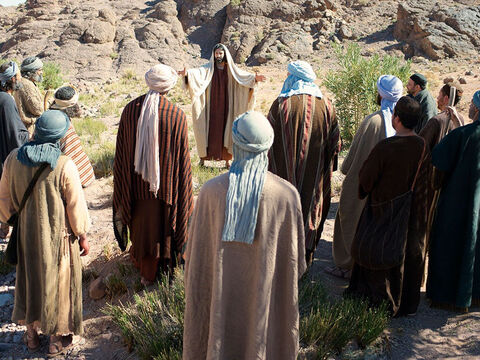
Today, Thursday 11 June, the Church remembers and celebrates St Barnabas. Barnabas was one of the early apostles, appearing in several places in the accounts of the communal and missional beginnings of the Christian church recorded in Acts. His given name was Joseph but those around him called him Barnabas, ‘son of encouragement’, which suggests that supporting, uplifting and inspiring others was a big part of his character.
We first encounter him helping to fund the work of the early apostles by donating the proceeds of property he sold. (Acts 4:37). Barnabas put his practical commitment where his faith led him.
We next see him advocating for Saul (Paul) to the believers in Jerusalem, speaking up for the power of Paul’s preaching and convincing them to trust Paul, despite their past experience of him as ardent persecutor. (Acts 9: 26-27) Barnabas had discernment and trust in God’s choice, and in what he was seeing.
Barnabas and Paul went on to be jointly chosen by God and filled with the Spirit to work together spreading the Gospel for a couple of years, to Jews and to Gentiles. Their boldness, encouragement and welcome to all, disregarding difference from the traditionally perceived boundaries of who or what constituted a believer, mark this missionary journey and led them, together, to work with others for the removal of barriers to inclusion in the Church. (Acts 13-15)
Barnabas and Paul split up after a ‘sharp disagreement’ about the inclusion of Barnabas’ cousin John Mark in a second missionary journey, leading to Barnabas taking Mark away with him. We don’t know exactly what was at the root of the argument, other than an issue concerning Mark’s suitability, but we do have a sense that these two friends and partners had strong personalities, and that Barnabas saw something in Mark which Paul did not at that time. What does seem apparent from later references in some of Paul’s letters is that Paul and Barnabas were reconciled and that Paul came to trust and depend on Mark and saw him as ‘an encouragement’. I wonder how far Barnabas Son of Encouragement was responsible for discerning the Spirit in Mark, recognising Mark’s potential as an apostle and nurturing him to become in turn an Encourager. I wonder if, without Barnabas, we would have been without Mark the Gospelist.
Barnabas is a significant figure in the growth of the early Church and he still speaks to us today. As we look at the world we live in now and the life of the Church within it, Barnabas invites us to ask what different forms might his generosity and support of others look like for us? How are we encouragers and enablers like Barnabas and Mark? How do we cope with being in sharp disagreement with others, and commit ourselves to discussion and to reconciliation? How far are we able to open up new understandings of God’s welcome to all extended through our faith community?
Barnabas may not be the most recognised saint, but he is a great encourager for us all.
Lucy G
Prayer Readings for Morning Prayer – 14th – 20th June
Prayers & Readings
Published on: Thursday June 11 2026, 8:59 am
Please find the daily readings for morning prayer here and you can also view it on screen or print out the PDF document.
You can also access the Church Of England’s Daily Prayer services.
If you wish, you can also download the Church of England “Daily Prayer” smartphone & tablet app from Apple Store or Google Play, which gives you the whole service including all the readings for every day.
If you or anyone you know would prefer a copy of Morning Prayer printed out, please let us know and we will post this to you. We will be sharing more resources online over the coming days and weeks, so please continue to check our benefice website and our Facebook page.
Image Courtesy of: Free Bible Images

Matthew’s call is almost offensively brief. No really, it is!
Blog Bulletin
Published on: Thursday June 4 2026, 2:14 pm
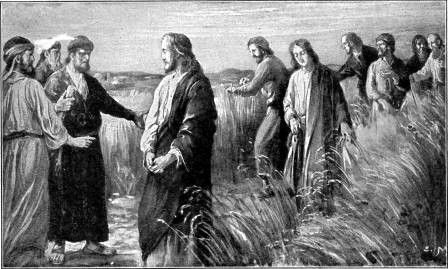
“Follow me,” Jesus says. And Matthew gets up. He leaves the booth where he works. Walks away from the ledger, the coins, the compromises, the quiet exclusions he has both suffered and enforced. No hesitation recorded. No moral inventory. No probationary period. Just… movement.
And then, almost immediately, a table.
Not a tidy, curated table of the respectable. Not a carefully managed gathering of the nearly-there. But a crowded, compromised, socially awkward table—tax collectors and sinners, bodies pressed close in a space that respectable religion (and a lot of churchgoers, if they’re honest) would instinctively avoid. It is not simply that Jesus tolerates their presence. He eats with them. He chooses proximity. He risks contamination of reputation.
The scandal is not accidental. It is the point.
Because the Pharisees, watching from a safe theological distance, ask the question that still echoes in our churches with unnerving familiarity: “Why does your teacher eat with tax collectors and sinners?”
It is, on the surface, a question about holiness. About boundaries. About what faithfulness requires us to refuse. We often think, “I must do this to stay holy and safe, within God’s rules!”
But underneath, it is a question about imagination. A question that risks shaking the very foundation of our faith.
Who do we believe God is for?
Jesus’ answer does not tidy things up. It disrupts further. “Those who are well have no need of a physician, but those who are sick.” This is not a compliment to the Pharisees, as much as they might wish it were. It is a reframing of the entire enterprise. The kingdom is not a reward for the already-adjusted. It is a place of encounter for those who know, or are willing to discover, their need.
And then that line—so easily domesticated, so rarely allowed to bite: “Go and learn what this means, ‘I desire mercy, not sacrifice.’”
Go and learn.
Not “you already know.” Not “you are nearly there.” But go. Learn. Begin again.
Ouch!
Because it turns out that it is entirely possible to build a religious life—structured, sincere, even sacrificial—that still resists mercy when it arrives in inconvenient bodies, or bodies that ask us to change.
The Church, if we are honest, has often preferred sacrifice. It is easier to organise. Easier to measure. Easier to control. Sacrifice allows us to draw lines, to name insiders and outsiders, to reassure ourselves that we are on the right side of them.
Mercy, by contrast, is unruly.
Mercy sits at table with people who do not yet know how to behave. Mercy refuses to wait until the story is resolved. Mercy risks misunderstanding, criticism, even failure, in order to remain open.
And mercy, crucially, requires proximity. It is very difficult to welcome the outsider from a distance.
We can, of course, say the words. Our websites can be immaculate in their inclusivity. Our signage can be clear. Our liturgies can include carefully crafted invitations. But the question this Gospel presses upon us is far more uncomfortable:
Who do we actually eat with?
Who knows, in their bones rather than on paper, that they would be received by us not as a project, not as a disruption, not as a theological problem to be solved—but as a guest, as a companion, as someone whose presence might even reveal something of Christ to us?
Those who are inconvenient to the tidy know it in their bones. Like children, they have a finely honed insincerity detector. And so they stay away from those places that want to solve them, or make them “like us”.
Matthew’s house becomes, in this moment, a kind of testing ground for the kingdom. Not because everything is resolved there, but because something true is allowed to begin. A space is made in which people who do not belong—by any conventional measure—find themselves sitting with the one who calls them anyway, and loves them just ‘because’.
And the Church is, or ought to be, that kind of house.
Not pristine. Not controlled. Not anxious about who might walk through the door or what they might bring with them. But expansive. Hospitable. Brave enough to trust that Christ is already present in the encounter, not waiting anxiously at the threshold for us to manage it correctly.
To broaden our outlook is not simply to become more “inclusive,” as though this were a matter of policy adjustment or branding. It is to undergo something closer to conversion. To discover that the boundaries we have drawn so carefully may not be the ones Christ recognises. To learn, again and again, what mercy looks like when it takes flesh in real communities, with real people, who do not arrive pre-sanitised, “looking like us”, knowing “our ways”.
It may even mean accepting that the Church does not always get to choose the terms of its own transformation. In fact, that’s pretty much guaranteed!
After all, Matthew did not apply. He was called.
And the table he hosted was not approved in advance.
The question is whether we are willing, like Jesus, to sit down anyway.
Rev. Talisker
Prayer Readings for Morning Prayer – 7th – 13th June
Prayers & Readings
Published on: Thursday June 4 2026, 9:18 am
Please find the daily readings for morning prayer here and you can also view it on screen or print out the PDF document.
You can also access the Church Of England’s Daily Prayer services.
If you wish, you can also download the Church of England “Daily Prayer” smartphone & tablet app from Apple Store or Google Play, which gives you the whole service including all the readings for every day.
If you or anyone you know would prefer a copy of Morning Prayer printed out, please let us know and we will post this to you. We will be sharing more resources online over the coming days and weeks, so please continue to check our benefice website and our Facebook page.
Image Courtesy of: Free Bible Images

Prayer Readings for Morning Prayer – 31st May – 6th June
Prayers & Readings
Published on: Thursday May 28 2026, 3:45 pm
Please find the daily readings for morning prayer here and you can also view it on screen or print out the PDF document.
You can also access the Church Of England’s Daily Prayer services.
If you wish, you can also download the Church of England “Daily Prayer” smartphone & tablet app from Apple Store or Google Play, which gives you the whole service including all the readings for every day.
If you or anyone you know would prefer a copy of Morning Prayer printed out, please let us know and we will post this to you. We will be sharing more resources online over the coming days and weeks, so please continue to check our benefice website and our Facebook page.
Image Courtesy of: Free Bible Images
Speaking the same language?
Blog Bulletin
Published on: Thursday May 21 2026, 2:25 pm
One of the things that I have always found so wonderful in the bible stories is how God speaks in different ways to different people. It is never a “one size fits all” approach. God speaks to us using language or methods or approaches that we can understand.
However it’s also really clear that there are a lot of people who will sneer at this (Acts 2.5) and laugh and say that those who are different to themselves are wrong or (in the case in Acts) drunk, or stupid, or some other insult. “It’s my way or the highway” is the approach that many have taken down the centuries when it comes to interpreting the bible and God’s teachings.
Whilst not all will be convinced, and some of us will always miss the point, there is hope for all of us! If God can use St Peter, who had the gift of opening his mouth and putting his foot straight in it, then getting it wrong is just part of learning. If God can use St Paul, who makes his first appearance as, in effect, accessory to the judicial murder of St Stephen, and can transform him into one of the greatest of the apostles, then no one is beyond God’s transforming power. Free will still comes into it. When God speaks to us, we have to be willing to hear, to listen, and to let go of all the old certainties and securities.
Sometimes however it still feels like we want to put faith (and God) in a neatly labelled box and keep it within certain boundaries – whether that be certain people / places / days. The thing is, living things don’t tend to stay awfully well inside their boxes. They tend to escape. Think cats in a box. Potentially cute and lovely, but unlikely to stay put for long once awake, and with a wonderful talent for turning the room upside down.
Pentecost feels a bit like that. The fire of the Holy Spirit is lit within the disciples, the cats come roaring out of the boxes like mini lions, and nothing is ever quite the same again.
The once-scared and frankly timid disciples speak to all who will listen, using every language in the city. More to the point, God speaks through them to others. God is not confined by boundaries, borders, language, method, or place. God speaks through the written and spoken word, in roars (occasionally), whispers (more often), and through the most unexpected people and situations.
I wonder if that is the particular challenge and consolation of Pentecost: God will not be tamed – in speech or style, or in who God chooses to use. We are invited not to control the message but to make ourselves available for it. The Church does not belong to those who are strictly careful or strictly certain; it belongs to the God who keeps finding fresh ways to speak to the world.
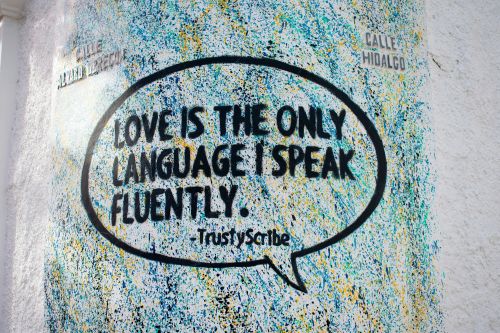
Listen! The language that is being spoken is Love.
Revd. Talisker
Image: hannah-gibbs-WkOJAYJtGtk-unsplash.jpg

Prayer Readings for Morning Prayer – 24th – 30th May
Prayers & Readings
Published on: Thursday May 21 2026, 9:12 am
Please find the daily readings for morning prayer here and you can also view it on screen or print out the PDF document.
You can also access the Church Of England’s Daily Prayer services.
If you wish, you can also download the Church of England “Daily Prayer” smartphone & tablet app from Apple Store or Google Play, which gives you the whole service including all the readings for every day.
If you or anyone you know would prefer a copy of Morning Prayer printed out, please let us know and we will post this to you. We will be sharing more resources online over the coming days and weeks, so please continue to check our benefice website and our Facebook page.
Image Courtesy of: Free Bible Images

Ascension
Blog Bulletin
Published on: Thursday May 14 2026, 2:42 pm
While Jesus was blessing them, he withdrew from [his disciples] and was carried up into heaven. And they worshipped him, and returned to Jerusalem with great joy; and they were continually in the temple blessing God. (Luke 24:51-53)
Somehow it can be easy to overlook Ascension as just part of the transition from Easter to Pentecost, a moment of farewell in the fifty days between Cross and Resurrection and those tongues of flame marking the gift of the Spirit and birth of the Church, a date to tidy away the Easter garden.
Ascension is too important, too exciting, to be passed over. It is not simply Jesus’ au revoir to his disciples but the key moment in a new phase of their lives then and future; a key moment for our life and living.
In our Sunday gospel readings so far this month we have heard Jesus tell his disciples that he goes to prepare a place for them in God’s house and that, in going, he will return to take them to himself (John 14:2-3). Having brought rescue and restored relationship with God into our lives through his human presence, death and resurrection on Earth, now by his ascension he carries our human lives into eternal relationship with God.
Then we heard Jesus say he would not abandon his disciples, but God would fill them with the Holy Spirit, and even after Jesus was no longer visible to the world, he would still be there for them and “because I live, you also will live” (John 14:18-19).
This Sunday, in Acts 1:8, we will hear Jesus promise that when the Holy Spirit comes, we receive power and become his witnesses in the world.
Without the Ascension we could not have the Holy Spirit and full life now (John 16:7); without the Ascension there is no place prepared and waiting for us in God’s eternal life. Without Ascension there is no Pentecost and no Church.
Because of that assurance and challenge as we approach the third of the great festivals of the church year, we also enter another period of anticipation and preparation – the days between now and Pentecost. These days, whether we count them as starting today or tomorrow, are a time to join with the first disciples in waiting and in joy.
This is active waiting: a time to be sharing worship and of blessing God for his gifts and those promises Jesus has made to us. It is also time to think about the implications of those gifts and promises for us as Church and to be preparing ourselves once more for the job of being people of the Risen, Ascended Christ.
The Church of England has, since 2016, provided special prayer resources that can be used by churches and by individuals throughout Ascensiontide as part of this preparation. Joining in this project, ‘Thy Kingdom Come’, is an opportunity to be part of the unity and force for change that is the Spirit at work around and through us. Joining in can be as simple or as creative as feels right for you.
Thy Kingdom Come’s hope is “that more people might hear the Good News of Jesus Christ and respond to His love.
Everyone is encouraged to:
- Pray for five people they know to come to faith in Jesus
- Engage in prayer and mission in their local contexts
- Join with Christians across the world in this season of unity, purpose, and spiritual renewal”
Archbishop Sarah Mullally has written this year’s Novena (literally ‘nine days of prayer’) – a collection of readings, reflections and prayers for each day of Ascensiontide. She says,
“prayer is not simply about asking God to change the world. I’ve come to realise that it’s as much about asking God to change us … if we truly mean them, our prayers have to be accompanied by action, just as the Apostles burst into action after Pentecost, empowered by the Holy Spirit. If we truly long for our Five (people we are praying for during this season) to encounter God, why should it not be through us?
We can be the hands of Christ to those who need them. With God’s help, we hold the possibility of being the answer to our own prayer”
If the thought that you are being called here to ‘burst into action’ like the Apostles at Pentecost is daunting, may I commend the thoughtful meditations of Archbishop Mullally’s novena and the simplicity of praying daily during this season for the faith and flourishing of five people you know in whatever way works for you. We may never spot just how these prayers are answered but we can be confident that God will be doing something with our praying – in the lives of those prayed for or perhaps in our own lives.
And if you would like ideas for creative prayer and action to use yourself or to share with friends and family, do dip into the Thy Kingdom Come Bright Ideas resource at:
https://share.google/lN4hYNhWtyILmmjtq
Thy Kingdom Come – Novena 2026: God With Us
https://share.google/G8jgWp0qPir7pp2en
Thy Kingdom Come – https://www.thykingdomcome.global
Lucy G
Image taken from the cover of Thy Kingdom Come: God With Us, using a photograph by Sarah Hu from Unsplash