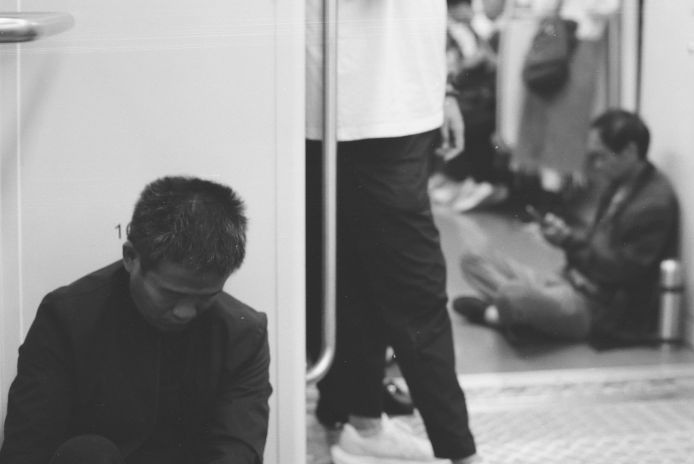
There is something quietly radical in the opening words of John 14: “Do not let your hearts be troubled.” It’s not a command barked from a distance, but an invitation spoken into fear, uncertainty, and the fragile reality of being human. Jesus doesn’t deny that trouble exists; he simply refuses to let it have the final word.
And then comes the image: “In my Father’s house are many rooms.” Not a few. Not a carefully selected guest list. Many. Enough space for complexity, for difference, for those who feel like they don’t quite belong anywhere else. This isn’t a vision of scarcity, where only the worthy squeeze through the door. It’s abundance. It’s welcome.
It’s hard not to notice how often we’ve shrunk this vision. We build walls where Jesus describes rooms. We turn “many” into “just enough for people like us.” But the passage resists that narrowing. If there are many rooms, then there is room for those who doubt, for those who question, for those who have been told—explicitly or quietly—that they don’t fit.
Thomas speaks up, as he often does, voicing the uncertainty others might keep hidden: “We don’t know where you are going.” It’s a beautifully honest interruption. And Jesus doesn’t shame him for it. He meets him there. “I am the way, and the truth, and the life.” Not a map to decode, but a person to encounter. Not a set of instructions, but a way of living.
That matters. Because it shifts the focus away from having all the right answers and toward being in relationship. The “way” is not a narrow path we must anxiously stay on, afraid of slipping off. It is a presence that walks with us, even when we feel lost.
And then Philip asks for something clearer, something visible, something practical: “Show us the Father.” It’s a request many of us carry, whether we say it aloud or not. Show us something we can trust. Something we can hold onto, something practical. Jesus’ response is both gentle and challenging: “Whoever has seen me has seen the Father.”
In other words, if you want to know what God is like, look at the one who eats with outsiders, who touches the untouchable, who speaks with those others avoid. Jesus’ answer is essentially: look at me. Look at how I treat people. Look at who I move toward.
That’s where inclusivity stops being an abstract value and becomes a lived reality, the measure of our faith. It’s not about being vaguely “welcoming” while keeping real distance. It’s about embodying the same kind of presence—one that draws near, listens deeply, and refuses to reduce people to categories. In short, are we moving toward people or away from them? Do our actions make it easier or harder for someone to feel like they belong?
The promise that follows is just as expansive: that those who believe will continue this work, even doing “greater things.” Not greater in spectacle, but perhaps greater in reach. Wider circles. Broader tables. More doors opened. The ripple effect of small acts of welcome. One person included leads to another, and another.
And then, the assurance: “I will do whatever you ask in my name.” Not a blank cheque for personal wishes, but an alignment with this way of being—this way of love that makes room. If that name is tied to this way of living—this steady, inclusive love—then the invitation is clear. Align your actions with it. Ask for the courage to live it out when it’s inconvenient or uncomfortable.
So maybe the question this passage leaves us with is simple, but not easy: if there are many rooms, who are we making space for? And just as importantly, who might still be waiting at the door, wondering if they are truly welcome? The change might come down to something very ordinary: a conversation, a decision, a moment where you can either close in or open up.
And maybe that’s where it starts: not with big gestures, but with noticing who’s around us, and choosing—again and again—to make a little more room.
Because the heart of this passage doesn’t just comfort troubled hearts. It reshapes them—stretching them wide enough to reflect a house with many rooms, and pointing to a way of living that makes space for others in the middle of everyday life.
Revd. Talisker